

Review · USA
Boston: Freedom Trail History Tour and Brewery Taste
Revolutionary Boston feels close enough to touch. This 2.5-hour walking tour links 11 of the 16 official Freedom Trail landmarks with clear stories about the people, arguments, and tragedies that pushed Boston toward revolution. I especially like the compact route and the way it ends with a full lunch and a drink at Democracy Brewing, rather than leaving you to hunt for food afterward. The main thing to consider is the amount of time on your feet, since the tour is not a good fit if extended standing or walking is difficult.
The group size is capped at 25, though several participants had much smaller groups. Guides such as Gianna, Nick, and Jon have received warm praise for making room for questions and adding details beyond a standard schoolbook account. You will not visit the North End or Charlestown on this outing, so this is a focused downtown history walk, not a complete Freedom Trail tour.
Key points at a glance
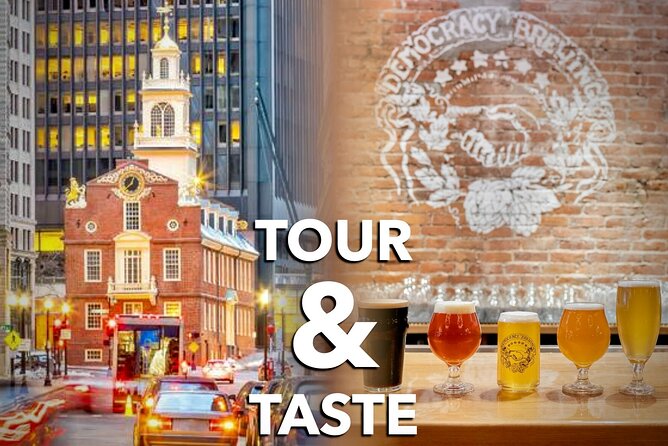
- Eleven landmarks in one short route: You cover major sites from Faneuil Hall Marketplace to Boston Common without spending a full day on the trail.
- The history has a clear storyline: The walk connects colonial government, public protest, the Boston Massacre, the Boston Tea Party, and the road to independence.
- Granary Burying Ground is a highlight: The cemetery offers a more personal look at Revolutionary Boston and is often the most memorable stop.
- The guides shape the experience: Gianna, Nick, and Jon have been praised for warmth, local insight, and making it easy to ask questions.
- Lunch is part of the price: Democracy Brewing provides a beer, seltzer, or mocktail tasting along with an all-inclusive New England lunch.
- The route ends indoors: The final hour takes place in a private dining room at a worker-owned brewery, a welcome change after the walk.
Why this Boston tour works well
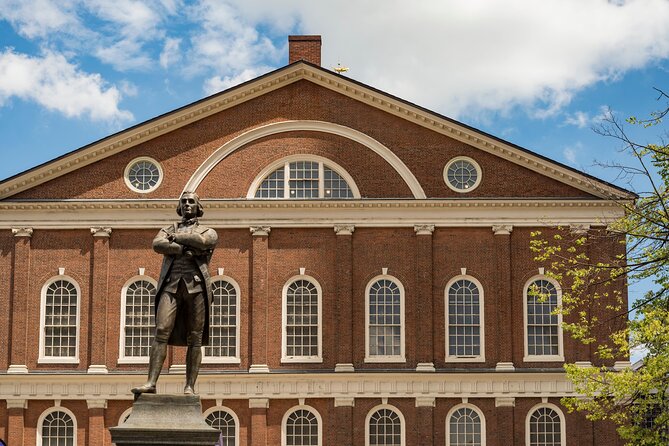
The Freedom Trail is easy to follow in theory, but the red line alone cannot explain why each building matters. A guide gives the places a sequence and a human voice. That matters in Boston, where a short walk can pass from a colonial burial ground to a site of political protest in just a few minutes.
I like that this tour is selective rather than overstuffed. You visit 11 major landmarks, then spend the final hour eating and tasting at Democracy Brewing. You will not see every point on the full trail, but you get a useful introduction without giving up an entire day.
The history centers on the tense years before the American Revolution. You will hear about British rule, colonial resistance, public meetings, violence, and the arguments that turned local disputes into a larger break with Britain. The route is especially useful early in a Boston stay because it gives you a map of downtown and a set of stories to carry into later sightseeing.
The group limit of 25 keeps the walk from becoming a parade. In practice, groups may be much smaller. One booking had only two participants, while another had 16 or fewer. That makes it easier to ask about a grave, a statue, or an architectural detail that catches your eye.
More History Tours in the USA:
- THE Wilmington History, Haunts & Breweries E-Bike Tour (4 hr)
★ 5.0 · 113 reviews - Lancaster History and Craft Beer Walk
★ 5.0 · 48 reviews - The Beer Bus- History & Craft Beer in St. Augustine
★ 5.0 · 32 reviews
Meeting at Faneuil Hall Marketplace
The tour begins at 121 South Market Street, inside historic Faneuil Hall Marketplace. Look for the black-and-white Coach banners opposite Quincy Market. The start time is 11 a.m., so arrive with enough time to find the meeting point in the market complex.
Faneuil Hall Marketplace is a useful opening setting because it connects modern Boston commerce with colonial civic life. The public market dates to 1826, while nearby Faneuil Hall dates to 1742. Faneuil Hall hosted Boston town meetings and earned its famous nickname, the Cradle of Liberty.
Your guide uses this first stop to establish Boston as a place where business, politics, and public debate shared the same small streets. You can expect about 10 minutes here. It is not a long historical lecture, but it gives the rest of the walk a clear starting point.
The marketplace can be busy, and the meeting area may feel less calm than the historic sites that follow. Still, this is a convenient place to begin, with public transportation nearby and plenty of food options if you want coffee before the tour.
From colonial government to the Boston Massacre
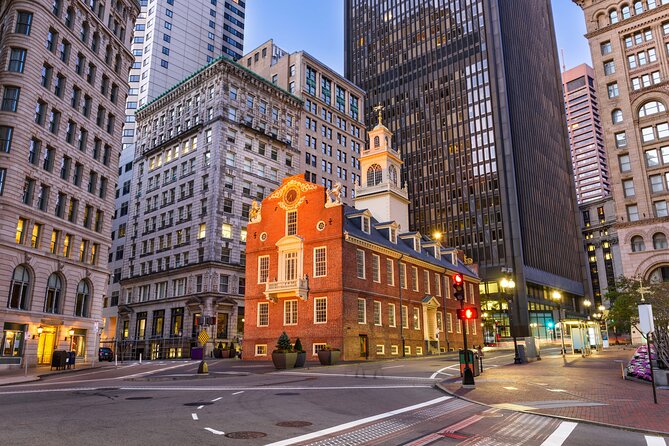
The next section moves through Boston’s colonial political center. The route passes the old Massachusetts capitol, the oldest public building in Boston, dating to 1713. The building helps explain how Massachusetts was governed before independence and why control over local laws became such a sore point.
You then reach the Boston Massacre Site, where British soldiers killed five Bostonians in 1770. The stop lasts about 15 minutes. This is one of the places where a guide is especially helpful, since the bare facts do not explain the fear, anger, and political use of the event.
The massacre became a powerful symbol for colonial resistance. The tour places it within the larger conflict rather than treating it as an isolated tragedy. You will also pass the former publishing house of Ticknor & Fields, a reminder that this part of Boston later became important to American publishing.
Another nearby stop is the Old State House, which served as the center of Massachusetts politics for more than a century. The route is compact here, so you get a strong sense of how close Boston’s government buildings, meeting places, and streets were to one another.
Old South Meeting House and the Boston Tea Party
At Old South Meeting House, the focus shifts from government to organized protest. This Congregationalist meeting house dates to 1729 and is closely linked to the Boston Tea Party of 1773.
The significance of the building is its role as a place where large crowds could gather, argue, and make decisions. The Tea Party did not emerge from nowhere. It followed years of disputes over taxation, representation, and British authority.
The visit here lasts about 15 minutes. Since the tour does not include North End and Charlestown, this stop carries extra weight as one of the clearest places to connect Boston’s street-level story with the national story of the Revolution.
You will also pass the first Church of England in Puritan Boston, founded in 1686 and rebuilt in 1754. That detail adds another layer to the city’s religious tensions. Puritan Boston was not a place of one simple belief system, and the arrival of an Anglican church showed how British power and religious difference could appear in the same neighborhood.
A few more brewery tours around the USA worth a look
- Hidden Brewery Caverns Tour in Cincinnati with Beer Tasting
★ 5.0 · 1,758 reviews - All-Inclusive Pub Crawl with Moonshine, Cocktails, and Craft Beer
★ 4.5 · 975 reviews - Denver Craft Beer Tour in Lower Downtown
★ 5.0 · 673 reviews - Nashville Brewery & Distillery Tour by Golf Cart
★ 4.5 · 664 reviews
Benjamin Franklin, Boston Latin School, and the oldest burial ground
The statue of Benjamin Franklin is a quick five-minute stop, but it opens the door to one of Boston’s oldest educational stories. The statue marks the site of Boston Latin School, founded in 1635 and recognized as the oldest public school in the Americas.
Franklin never attended the school, but the site connects him to Boston’s tradition of public education and civic life. A guide can turn this from a passing statue into a useful lesson about who received an education in colonial Boston and how learning shaped public leadership.
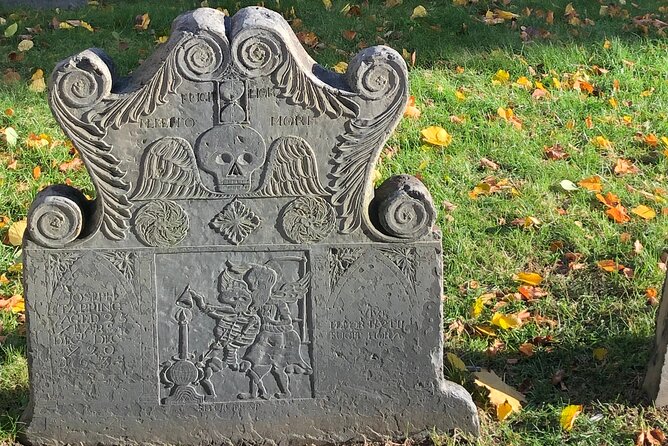
The route also passes Boston’s first burying space, founded in 1630, and the city’s oldest Freedom Trail landmark. You may find this section especially interesting if you enjoy quiet historical places more than grand civic buildings. The burial grounds are not simply stops between larger attractions. They show how closely daily life, worship, illness, death, and public space were linked in early Boston.
Granary Burying Ground is the emotional center
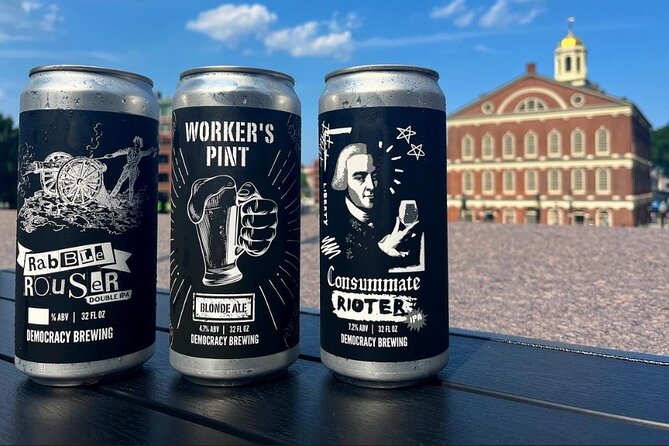
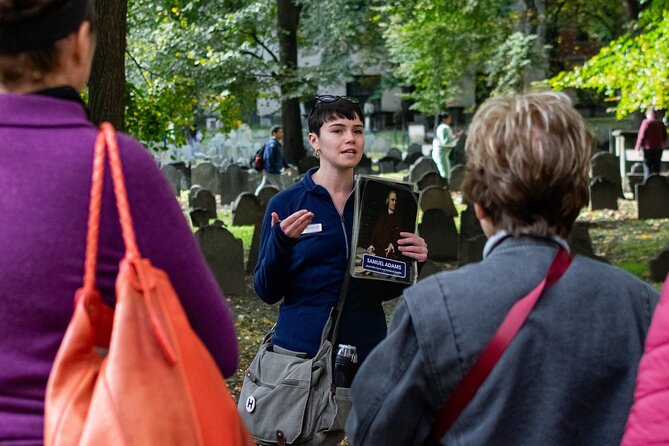
Granary Burying Ground receives about 15 minutes, and I would pay close attention here. It is Boston’s third-oldest burying ground and the final resting place of several major figures from Revolutionary Boston.
One of the strongest points of the walk is the way the cemetery makes the political story personal. At Faneuil Hall and the Old State House, you hear about institutions and public conflict. At Granary Burying Ground, you encounter the people who lived through those disputes and helped shape what came next.
A past participant called the cemetery the best part of the walk, and that assessment makes sense. The site is compact, atmospheric, and full of names tied to the Revolution. Your guide can help you understand which graves matter and why, rather than leaving you to read every marker on your own.
The visit also offers a natural pause in the route. You are still standing and walking, but the pace becomes quieter. If you want photographs, this is one of the better places to slow down, though the tour schedule may not allow a long independent exploration.
Boston Common and the end of the walking route
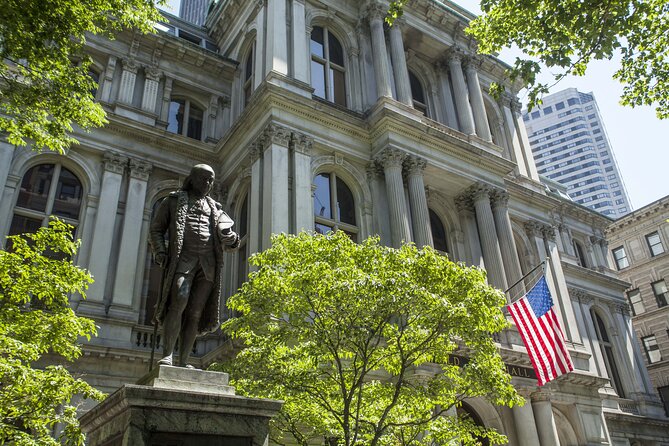
The walk continues past an active church that was once the tallest building in 19th-century Boston. It also passes the Massachusetts State House, known by the nickname Hub of the Solar System. These sites bring the story forward from colonial Boston into the city’s later civic identity.
The route finishes its historical portion at Boston Common, founded in 1634. It is the oldest public land in the Americas and began as Boston’s communal grazing pasture. That origin says a great deal about the city’s early practical side. Before it became a public park, it served a direct community need.
Boston Common is a fitting endpoint for the walking section because it ties together public land, public argument, and public memory. You have moved from a marketplace and town meeting hall through conflict, protest, cemeteries, churches, and government buildings.
This section is also where the physical demands of the tour become clear. The walk is described as easy paced, but you should expect to be on your feet for much of the first 90 minutes. Wear comfortable shoes and plan for changing weather.
A proper finish at Democracy Brewing
The last hour takes place at Democracy Brewing, located at 35 Temple Place. The tour ends inside the brewery, not back at the starting point. That makes the end point convenient if you want lunch in the downtown area, but you should remember that you will need to make your own way back to your hotel or next attraction.
Democracy Brewing is a worker-owned local brewery with a full restaurant menu. The tasting includes beer, seltzer, or a mocktail, so people who do not drink alcohol are not left with only a glass of water. An all-inclusive New England lunch is also included, served in a private dining room.
I like this arrangement because it gives the tour a social finish. After hearing about Boston’s arguments and public meetings, you sit down with food and a local drink. It feels less like a rushed add-on and more like a chance to talk through what you have seen.
The brewery also improves the value of the $79 price. A standard guided walking tour can feel expensive when it includes only the guide and the route. Here, your fee covers the history walk, a tasting, and lunch. The value is strongest if you were already planning to buy lunch and want a drink after the walk.
Do not book this solely as a brewery visit. The tasting is part of a larger history program, and the time at the brewery is about one hour. If your main goal is a long beer flight or an afternoon spent sampling, a dedicated brewery outing may suit you better.
Guides and group size
The individual guide can shape this tour a great deal. Gianna has been praised for a friendly manner and for helping participants feel comfortable. Nick is noted for an easy pace and historical details that go beyond a basic American history lesson. Jon is a local historian and archivist who has been singled out for making time for questions.
Those details matter because Boston’s Freedom Trail can become a list of dates if the guide rushes. The best version of this walk is conversational. You should feel able to ask why a particular event mattered, how the sites connect, or what changed after the Revolution.
The group maximum is 25, and the actual number may be lower. Smaller groups are a real advantage here, especially at the cemetery and along busy downtown streets. They also make it easier to hear the guide and stay together.
The tour is offered in English only. Service animals are allowed, and the route is near public transportation. It requires a moderate level of physical fitness and is not recommended if standing for extended periods is difficult.
What the $79 price includes
At $79 per person, this is not the cheapest way to walk the Freedom Trail. You can follow much of the route independently for little or no admission cost. The tour earns its price through the guide’s interpretation, the smaller group setting, and the included meal and drink.
The food component is important. You are not paying $79 for two and a half hours of narration alone. You receive a beer, seltzer, or mocktail tasting and an all-inclusive New England lunch at Democracy Brewing. If you would otherwise buy lunch downtown, the difference in cost becomes easier to justify.
The price also suits people who want an efficient first look at Boston. In a single morning and early afternoon, you get a structured history lesson, local recommendations, and a meal. You will need separate plans for North End and Charlestown, but that can be an advantage if you prefer to explore those districts at your own pace.
Practical details before you book
The tour starts at 11 a.m. at Faneuil Hall Marketplace. Look for the black-and-white Coach banners opposite Quincy Market, and allow time to reach the meeting point.
Free cancellation is available up to 24 hours before the start time for a full refund. Changes made less than 24 hours before departure are not accepted, and late cancellations are not refunded. The tour requires good weather, so a weather cancellation leads to a different date or a full refund.
Plan on comfortable footwear and clothing suited to the forecast. The first part takes place outdoors, and the experience is not designed for someone who needs frequent sitting breaks.
Who should book this Freedom Trail tour?
I would choose this tour for a first visit to Boston, especially if you want the main Revolutionary sites explained in a sensible order. It is also a good fit for history-minded locals who want a fresh account of familiar streets, since the guides add local details and welcome questions.
The tour works well for couples, small groups of friends, and anyone who likes to combine sightseeing with lunch. The brewery finish gives the day a relaxed social rhythm.
I would think twice if you want to cover every Freedom Trail landmark, spend time in the North End, or visit Charlestown. You should also skip it if a long period on your feet is uncomfortable. In those cases, a self-guided plan with more breaks may be a better choice.
Should you book it?
Book this tour if you want a focused Boston history walk with lunch already arranged. Its best features are the clear Revolutionary storyline, the chance to see Granary Burying Ground with a guide, and the warm, question-friendly style associated with guides such as Gianna, Nick, and Jon.
At $79, the value depends on using the meal and tasting. If you would pay for lunch anyway, the package is quite reasonable. If you only want a quick walk along the Freedom Trail, you can spend less on your own.
For most first-time visitors, I would book it near the start of a Boston stay. You will learn the city’s basic historical map, collect a few local suggestions, and finish with a satisfying meal instead of a vague recommendation to find one yourself.
FAQ
How long does the Freedom Trail history tour last?
The tour lasts approximately 2 hours and 30 minutes, including the walking route and the one-hour visit to Democracy Brewing.
Where does the tour begin?
It begins at Faneuil Hall Marketplace, at 121 South Market Street in Boston. Look for the black-and-white Coach banners opposite Quincy Market.
Where does the tour end?
The tour ends at Democracy Brewing, at 35 Temple Place, Boston, Massachusetts.
What is included in the price?
The price includes a guided visit to 11 of the 16 official Freedom Trail landmarks, a beer, seltzer, or mocktail tasting, and an all-inclusive New England lunch.
Does the tour visit the North End or Charlestown?
No. North End and Charlestown are not included in this tour.
Is the tour suitable for people with limited mobility?
The tour requires a moderate level of physical fitness and is not recommended for people who have difficulty standing for extended periods. Service animals are allowed.
What happens if the weather is poor?
If poor weather causes the tour to be canceled, you will be offered a different date or a full refund. You can also cancel for a full refund if you do so at least 24 hours before the start time.
Just added around the USA
- Private Custom Brewery Tour in a ’72 VW Bus – Roadies Local★ 5.0 · 13 reviews
- Viking Brewery Tour★ 5.0 · 23 reviews
- NON BUS MOVIE STARS Traverse City Brewery And Distillery Tour★ 5.0 · 2 reviews
- KaBrew: Traverse City’s Original Kayak Brewery Tour Experience★ 4.5 · 15 reviews
- Private Sidecar Brewery Tour through Temecula★ 4.0 · 7 reviews
- Tampa Heights Private Brewery Tour by Custom Golf Cart★ 5.0 · 11 reviews
- Temecula’s Best Combo/Beer Tour★ 5.0 · 5 reviews
- Ybor City Private Brewery Tour by Custom Golf Cart★ 5.0 · 14 reviews
USA Brewery Tours, compared.
Hidden Brewery Caverns Tour in Cincinnati with Beer Tasting
Read our review →

Nashville Brewery & Distillery Tour by Golf Cart
Read our review →
Haunted Underground Shanghai Tunnel Tour with Brewery Tastings
Read our review →

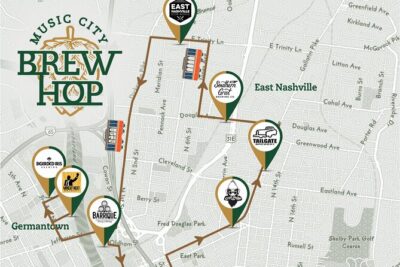
Brewery Hop-On Hop-Off Trolley Tour of Nashville
Read our review →
Signature Boston Guided Brewery Tour with snack
Read our review →Browse the lists this tour appears in